Amazon Kindle (2026): Two-minute review
When Amazon announced its 2026 range of Kindles on October 1, I balked at the prices, particularly for the entry-level model. Then again, I should have expected it, given the current cost of components. The days of Kindles being the affordable ereader are long gone now. Yet the 2026 entry-level Kindle does go some way in justifying its higher price compared to its predecessor thanks to all new hardware that includes new colors — now also in an aluminum chassis that gets you double the storage (32GB) — as well as a thinner and even lighter design. The power button being moved to the right edge is also a welcome change that made my colleague Lance Ulanoff especially happy. The design changes also include the screen now lying flush with the bezels and the display offering better contrast that improves text sharpness. However, I noticed a tiny bit of light bleeding on the top edge of the screen when reading in dark mode, which Amazon has acknowledge is a flaw, and the slim bezels don’t offer enough space for the thumb to rest, thus triggering accidental page turns. The page-turn speed here hasn’t visibly improved over the 2024 model, but general navigation has. Amazon says the 2026 base Kindle is 30% faster than the previous model and, while that’s hard to measure, I can attest that many other functions on the latter, like opening books, accessing the Kindle Store and going through settings, and are definitely faster. (Image credit: Sharmishta Sarkar / TechRadar) That’s all that’s new here, though, which is why I said the 2026 Kindle only goes ‘some’ way in justifying its cost. At launch, when I began my testing of this Kindle, there were no new software features to distinguish it from previous generations. However, Amazon released a new firmware just a couple of days before the publication of this review that has made a small change to how some books appear in the library tab — all titles within a series are now grouped together. This software update has also been rolled out to the previous Kindle generation, so you really aren’t missing much if you don’t upgrade… except for the slight increase in speed and the new screen. There is still no warm light or auto-adjusting brightness for evening reading, and neither is there any waterproofing, not even on the aluminum version which has a screwed on back panel rather than the plastic one’s pop-off option. Yes, the rear panels can be removed now to allow users to change the battery when needed, in compliance with EU regulations, but I haven’t seen any official battery packs being sold as yet. Battery life, however, is lackluster compared to the Kindle Paperwhite (both 2024 and the newer release) — it’s practically half, which makes the aluminum Kindle especially harder to recommend over the 2026 Paperwhite as the prices aren’t all that different. So while I can appreciate that a new Kindle would cost more, I’m struggling to find value in it, more so because the Kobo Clara BW comes with waterproofing and warm light temperatures at a similar price to the plastic 16GB Kindle, albeit in a now two-year-old device. (Image credit: Sharmishta Sarkar / TechRadar) Amazon Kindle (2026) review: price & availability
First announced October 2026
Available in major markets, including the US, UK and Australia
List price from $149. 99 / £134. 99 / AU$279
With a starting price of $149. 99 / £134. 99 in the US and the UK for the ad-supported 16GB plastic Kindle, it’s still a cheaper option compared to the 2024 release of the Kobo Clara BW that retails for $159. 99 / £149. 99. However, you get a few more features with the latter that the new 2026 release of the entry-level Kindle still doesn’t get you — namely, warm light and waterproofing. If you don’t want the ads, then you need to tack on another $20 / £15 to that cost, which shifts the price dynamic between the Kindle and its Kobo counterpart. In Australia, only the ad-free version of the Kindles has always been available and the starting price is now AU$279, which is AU$10 more than the Kobo Clara BW. The 32GB Kindle Aluminum (yes, that’s what Amazon is calling it in the US and is the model sent to TechRadar for this review) is ad-free by default and will set you back $189. 99 / £169. 99 / AU$299. Given the 2026 Kindle Paperwhite costs just another $10 / £15 / AU$50 (with ads in the US and UK), I’m struggling to see the value in the shiny new aluminum Kindle. • Value score: 3 / 5
(Image credit: Sharmishta Sarkar / TechRadar) Amazon Kindle (2026) review: specs
Display type:
E Ink (possibly Carta 1300)
Screen size:
6 inches
Resolution:
300ppi
Processor:
unknown
Frontlight:
Yes, white light only
Storage:
16GB / 32GB
Battery:
up to 6 weeks (capacity unknown)
Water protection:
None
Software:
Linux based
Connectivity:
Wi-Fi, Bluetooth, USB-C
File support:
6 natively; 1 audio
Dimensions:
108 x 152. 8 x 6. 85 mm (4. 3 x 6. 0 x 0. 3 inches)
Weight:
140g (4. 9 oz) for plastic finish; 162g (5. 7 oz) for aluminum
Amazon Kindle (2026) review: Design & display
Shiny, new hardware, including fresh colors and a new aluminum model
Thinner, lighter and more compact than before
Gorgeous new display with better contrast and sharper text
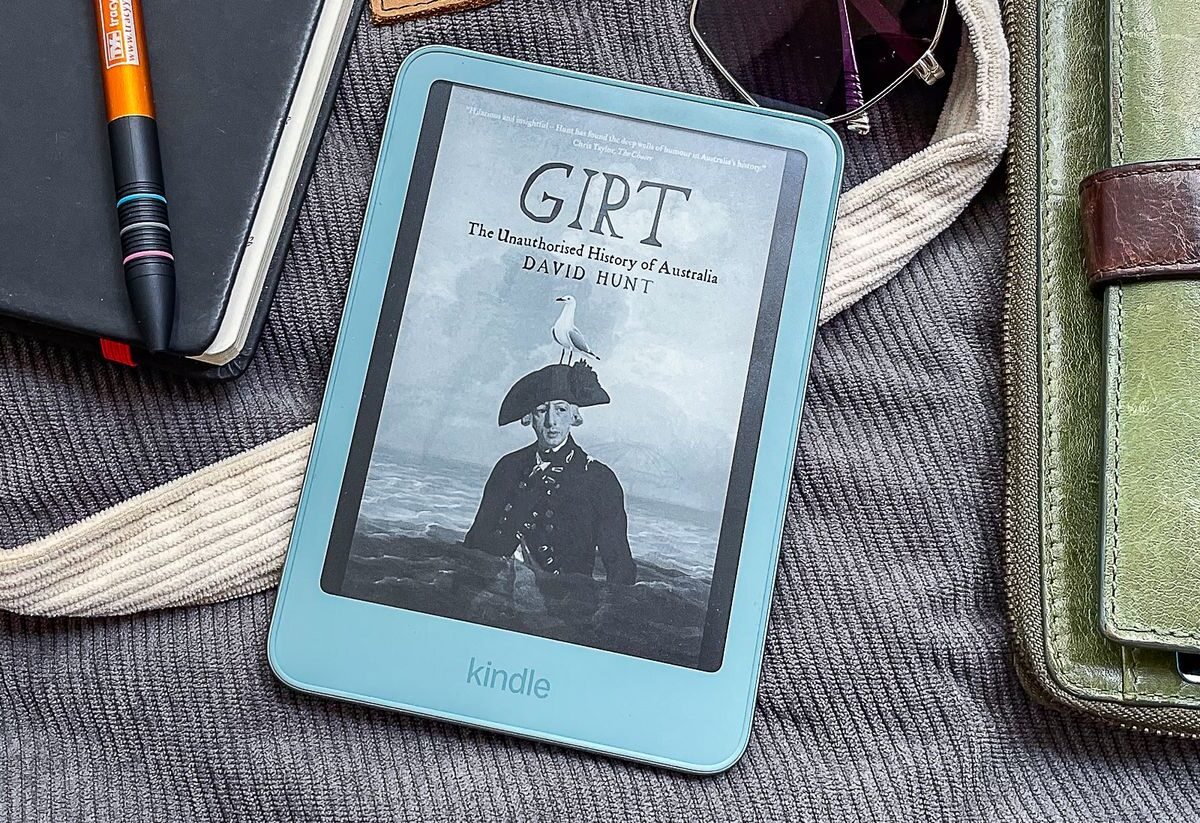
I might have been disappointed with the 2024 edition of the base Kindle, saying it wasn’t really an ‘upgrade’ just because it came in a lovely new color, but that’s not the case with the 2026 release. This time, the entry-level Kindle truly is a worthwhile upgrade — at least in terms of hardware. Nearly everything about it is brand-spanking new and I love it. The most obvious difference between the previous Kindle generations and the 2026 model(s) is the new chassis. Now available in two finishes — plastic and aluminum — and lovely new colors (Ube and the usual Graphite for the former, Alpine Sky and Seaglass Green for the latter), there’s more choice where the base Kindle is concerned. The other point of difference, and not just between generations but also between the two finishes, is that the aluminum version comes with 32GB of storage (like the Signature Editions of the Paperwhite and Colorsoft) and is ad-free by default in the US and the UK. (Image credit: Sharmishta Sarkar / TechRadar) While I personally didn’t mind the power/sleep button on the bottom edge of the Kindle, now having it just below the top right corner is a good move, putting the cheapest Kindle in the new range on a similar design footing as the current Kindle Scribes. The flush screen on both the plastic and metal Kindles makes it look modern and more premium, although the thin side bezels triggered numerous accidental page turns during my testing. I also noticed a small amount of light bleed on the top edge of the review unit sent to me, visible in dark mode. This has been discussed on Reddit and Amazon has acknowledged there is a flaw and is ready to exchange any units with such issues. Impressively, though, the screen and the aluminum body aren’t fingerprint magnets, which is my biggest relief compared to, say, the 2024 edition of the Kindle Paperwhite that showed off every oily smudge on the front and back. (Image credit: Sharmishta Sarkar / TechRadar) Another hardware difference — and a first for Amazon — is the replaceable battery. On the plastic model, the rear panel just pops open, but you will need tiny hex screwdriver to remove the aluminum panel if you ever need to change the battery. This is accordance to EU regulations, but I am yet to see official replacement batteries being listed on Amazon. It’s early days yet, and a Kindle battery typically lasts about 10 years, so I’d expect to see official listings down the line. In comparison, though, Kobo’s 2024 ereaders — namely, the Libra Colour, Clara BW and Clara Colour — have even better repairability, with screens and motherboards also replaceable. So if longevity is important to you, Amazon still has a way to go to impress its Kindle users. (Image credit: Sharmishta Sarkar / TechRadar) As much as I love the new colors, the star of the show here is the upgraded display. The entry-level Kindle finally gets the E Ink Carta 1300 screen tech that the 2024 model missed out on. Admittedly it still lacks warm LEDs, which is disappointing, but despite that it’s the sharpest display on the entry-level Kindle that I’ve seen to date. It also boasts better contrast where blacks are blacker, even the background in dark mode, and that gives text better clarity overall. Alongside the lack of warm hues for the frontlight, the entry-level Kindle still doesn’t have waterproofing, which is probably for the best at least for the plastic model where the rear pops right off to access the battery. However, it would have been nice if Amazon had deigned to provide at least one of these missing features on the aluminum version to justify the higher price tag, especially since there are hardly any new software features to speak of here. Design & display score: 4. 5 / 5
(Image credit: Sharmishta Sarkar / TechRadar) Amazon Kindle (2026) review: Software
Books in a series are now grouped together in the Library tab
Additional wallpapers are nice
Not much else is new with the latest software release
If you’ve been using an older Kindle, you’ll be intimately familiar with navigating around the 2026 release as well. At the start of my two-week testing of the new Kindle, seemingly nothing had changed with the release of the software version 5. 20. 1. 0. 1. However, just a day before this review was published, Amazon released firmware 5. 20. 1. 02 and the only new feature here that I’ve come across is books in a series being grouped together in the Library tab…