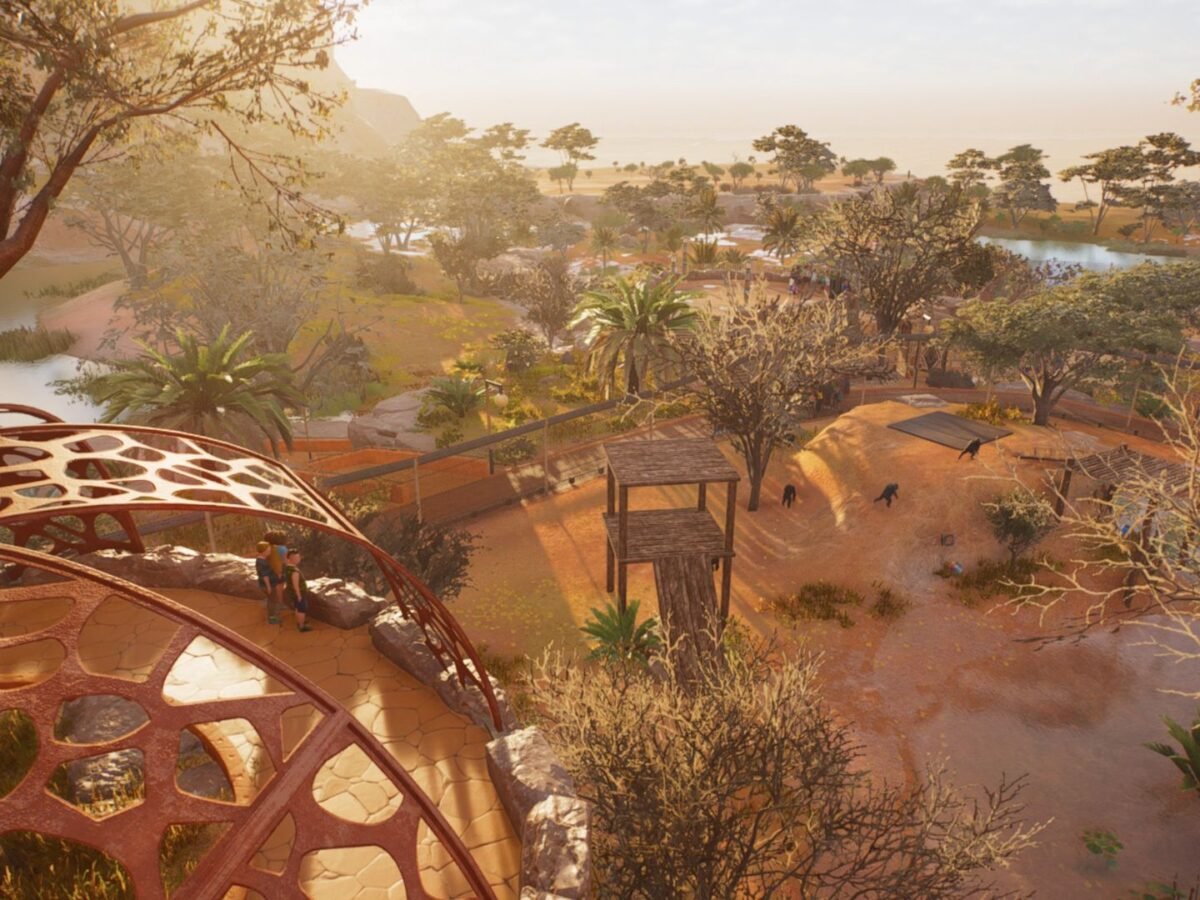
Planet Zoo 2 is the sequel to 2020’s zoo-building management sim. And it’s crammed with more animals, scenery items, and game modes than ever, so you can really let your creativity run wild. Building zoos is my happy place. Life is stressful, the cost of living is shocking, and politics is so absurd I often feel like I’m being doped with increasing levels of satire to make the world’s first irony-immune man. Playing games like Planet Zoo 2 lets me spend time in a simpler world, where I can spend five hours tweaking the placement of ferns and rocks to make simulated siamangs happy. As a result, I’ve spent a lot of time playing the original Planet Zoo . More than a lot, actually. Over 1,100 hours. That’s more than 45 days straight — a fact that makes me feel slightly queasy about my priorities in life. I’ve spent more time experiencing its highs and dealing with its limitations than I’ve spent with my extended family. So, naturally, as soon as I heard Planet Zoo 2 was in development, I knew I had to be the person to put it through its paces. With the addition of aquariums, aviaries, wildlife reserves and more besides, I couldn’t wait to get my teeth into the new game and see what it was capable of. Even if it meant jettisoning a thousand hours of work, binning my old zoo and starting building from scratch, I was eager to see how all the new tools and content upgraded play. So are the two games birds of a feather, or is Planet Zoo 2 of a different stripe entirely? Wings, fins and fur
(Image credit: Frontier Developments) Best bit
(Image credit: Frontier Developments) Without a doubt, aquariums are my favorite new feature. Not only can you add a fantastic variety of undersea beasties, but you can also decorate tanks with rich-looking reefs, with everything from fronds of seaweed to brightly colored corals. As a bit (okay, a lot) of a Planet Zoo nerd, when Planet Zoo 2 was announced, I had plenty of things on my mental wishlist of upgrades I’d like to see. But top of my list were the addition of both flying birds and fish, two types of critters that felt conspicuous in their absence from the huge roster of DLCs released for the original game. So honestly, it was pretty pleasing to see both of these kinds of exhibits included when previews of the game dropped. Flat out my favorite addition has been aquariums. These new piscine enclosures are as pretty as a picture. Aquariums feel really versatile, whether you want huge open-air tanks or to build a wall of fish into your restaurant. Walkthrough tunnels make creating immersive exhibits a breeze, and the need to filter habitats separately depending on whether they require fresh, brackish, or salty water adds an extra layer of — excuse the pun — depth. Underwater decorations also look fantastic, allowing you to create really richly colored coral reefs and rafts of seaweed and grasses. But naturally, the animals in Planet Zoo are the stars of the show, and there’s a huge variety of sea life on offer to populate your tanks, whether you’re looking for sharks, rays, turtles or schools of fish. Wisely, Frontier has steered away from including many sea mammals like whales and dolphins — a sensible decision in light of the increasing attention that’s been paid to the ethics of keeping highly intelligent, social mammals in small tanks — but the game does include manatees, and there’s still huge potential here for semi-aquatic mammals like seals and walruses. (Image credit: Frontier Developments) Leading up to Planet Zoo 2 ’s release, I was particularly excited about the addition of flying birds, as this adds a whole new dimension to your habitats compared to flightless fowl like ostriches and emus. While aviaries — essentially roof support poles and netting sitting over a classic habitat — don’t feel quite as fresh an experience as creating aquariums, I can still see how I’ll be able to use them to create stunning enclosures. And the variety of feathered friends already on offer is decent, adding everything from toucans to brightly colored long-tailed parakeets. In fact, animals in general have had a definite glow-up in Planet Zoo 2 . Not only have the earliest, lower-definition critters from the base game, like lions and African elephants, received new meshes to bring them in line with sleeker-looking critters from later expansion packs, but fauna in general looks stunning in this game. There’s also a really solid variety of animals on offer at launch, from gila monsters to giant pandas. Don’t get me wrong: some of my personal favorites from the original game and expansions still aren’t here. Frankly, any zoo that doesn’t have fennec foxes in it is not a zoo I want to spend time in. But all the classics are here, with just enough funky additions — Goodfellow’s tree-kangaroo, anyone? — that I’m already pretty jazzed about additions that might be coming up with future updates. All told, the variety offered by Planet Zoo 2 makes creating diverse, vibrant zoos feel easier than ever. Management material
(Image credit: Frontier Developments) Given that Frontier Developments has launched two more park management games — Planet Coaster 2 and Jurassic World Evolution 3 — in the almost seven years since the OG Planet Zoo’s release, its core gameplay loop has inevitably evolved. First off, career mode feels the most well-rounded it’s been in a Planet game to date. While you’ve always been able to dip in and out of individual missions on the map to complete objectives and pick up bronze, silver, and gold medals, the progression between them feels increasingly organic. Functioning as an extended tutorial, career mode leads you through a variety of maps and scenarios throughout the world. As you complete bronze medals at each zoo, you’ll learn new mechanisms and unlock new accreditation tiers, in turn granting you access to higher tiers of animals. While this does mean your progression is somewhat locked to missions, the non-linear connection between maps made me feel much freer to pop in and out of maps than past games. A big part of this is down to the addition of wildlife reserves. Releasing animals was a relatively shallow mechanic in Planet Zoo — enabling you to offload unneeded creatures in return for dollars or Conservation Points — in its sequel, this has been spun out into a sub-game in its own right. Wildlife reserves’ core gameplay loop is pretty straightforward. When you arrive in a new reserve, you’ll create ecosystems for released animals by painting one in the landscape, clearing any invasive plant species, and balancing the terrain and plant requirements. Once it’s ready, you’ll be required to release animals from your zoos of the compatible type, balancing the ecosystem, and place research items like camera traps and acoustic monitors to unlock higher levels of research in your zoos. I’ll be honest here: wildlife reserves are the area that I feel both sound like the most transformative on paper and yet haven’t fully clicked for me in practice. Part of this is because they rely heavily on my least favorite tool: the terrain painter — more on that shortly. (Image credit: Frontier Developments) But it’s also just because these mechanics feel relatively shallow. These reserves don’t really require much ongoing management, and given there’s not much more detailed interplay among the flora and fauna once it’s placed, you can basically just set and forget these areas. As a result, I often found myself just rushing to establish ecosystems and dump the required animals in them so I could return to meatier zoo management. I’m hoping that the more I play with them, the more I’ll find to love about these freer locations, but so far they’ve stood out the least to me. One other factor that’s occasionally caused me slight discomfort is the presence of bugs. No, I’m not talking about those tarantula exhibits: at release, there have definitely been some odd issues creeping in. I’ve encountered nothing game-breaking, just slightly hinky behavior here and there. At one point, items I was meticulously placing using the advanced move tools would randomly jump to a different position once I clicked place…